
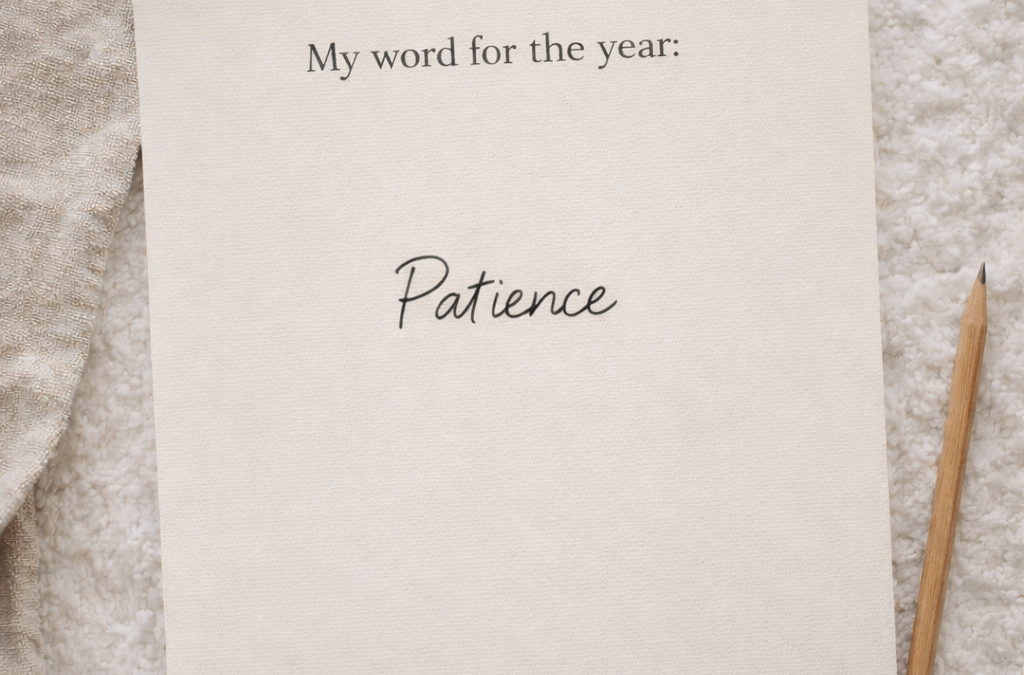
Choosing a Personal Word for the Year
For You and Your Children
Once a year, each member of the family chooses one word for the year ahead.
Adults included.
This is not a goal.
Not a resolution.
Not something to fix or improve.
It is a word that reflects who you are becoming, and what might support you in this season of life.
Children feel this immediately. When parents choose a word for themselves too, it shows that growth does not stop at adulthood. It models self awareness, reflection, and responsibility for one’s inner world.
This becomes a shared family language, not a top down lesson.
Why a single word works
A single word works because it is simple enough to remember and meaningful enough to return to.
Research around emotional regulation and decision making shows that when people are overwhelmed, the brain responds better to a clear anchor than to complex instructions. One word creates a pause. It shifts the nervous system out of reaction and back into choice.
For children, this matters even more.
Instead of being corrected, they are invited to reflect.
Instead of being managed, they are trusted.
For adults, the word becomes a quiet guide. Something to return to when life feels busy, reactive, or scattered.
How to do it as a family
Choose a quiet moment together.
This might be at the end of the year or the beginning of a new one.
Sit together somewhere familiar.
The table.
The couch.
The floor.
Each person shares their word for the year.
For children, a parent may choose the word and explain why.
For older children and adults, the word can be chosen personally.
When sharing, name what you see and why the word matters.
You might say:
“I chose this word because it reflects what I want to practice this year.”
“I chose this word for you because I see it in you, and I think it will support you.”
There is no debate.
No pressure.
No promises required.
Write each word down somewhere meaningful.
In a journal.
On a card.
Inside a book.
Pinned on a wall or tucked beside the bed.
How the words are used
Throughout the year, these words become part of everyday language.
Not rules.
Not reminders.
Anchors.
When emotions rise or situations feel tricky, you return to the word.
For a child:
“Your word this year is power. What does power choose here?”
For yourself:
“My word this year is patience. What does patience look like right now?”
This shifts the moment from reaction to reflection.
From control to choice.
Over time, the word begins to guide behaviour naturally, without force.
Why this matters long term
Children build their inner voice from the language they hear repeatedly.
When a child hears reminders of who they are, rather than what they did wrong, that language becomes how they speak to themselves.
When adults model the same practice, children learn that self leadership is ongoing.
A personal word:
-
Reinforces identity rather than behaviour
-
Reduces power struggles
-
Builds emotional awareness and self respect
-
Creates shared values without lectures
Year by year, these words become markers in your family story.
Quiet guides that shape how each person learns to pause, choose, and grow.